

Verified SC-200 Exam Dumps PDF [2025] Access using Exam4PDF
Try Best SC-200 Exam Questions from Training Expert Exam4PDF
The SC-200 exam tests the candidate's ability to configure and manage security solutions, apply threat intelligence, and investigate and respond to security incidents. SC-200 exam also covers topics such as identity and access management, data protection, network security, and cloud security. Microsoft Security Operations Analyst certification is ideal for security analysts, security administrators, and other security professionals who want to enhance their skills and expertise in managing security operations. By earning the SC-200 certification, candidates can prove their competence in managing security operations and demonstrate their commitment to advancing their career in the field of cybersecurity.
NEW QUESTION # 45
You are investigating an incident by using Microsoft 365 Defender.
You need to create an advanced hunting query to detect failed sign-in authentications on three devices named CFOLaptop, CEOLaptop, and COOLaptop.
How should you complete the query? To answer, select the appropriate options in the answer area.
NOTE: Each correct selection is worth one point.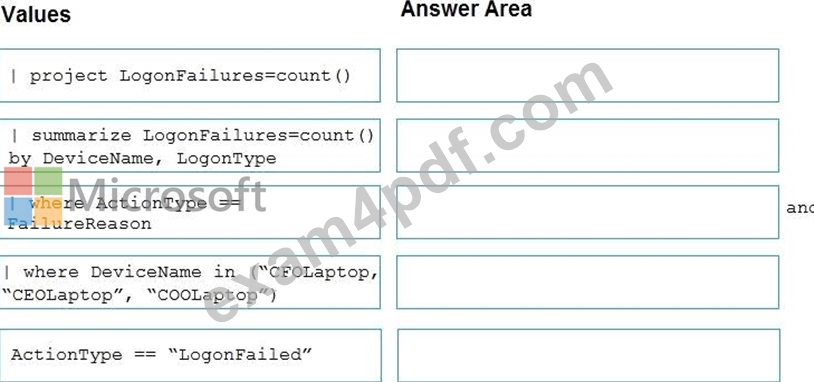
Answer:
Explanation: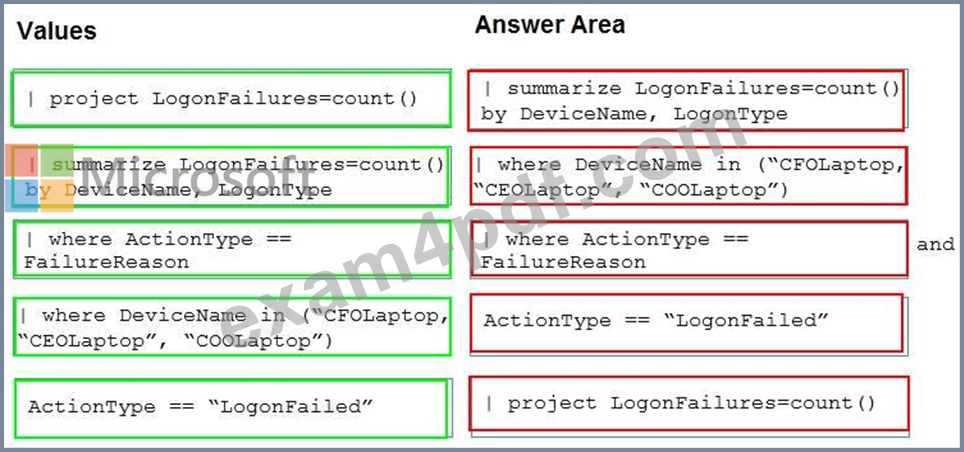
NEW QUESTION # 46
You have the resources shown in the following table.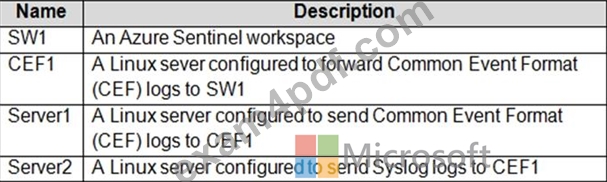
You need to prevent duplicate events from occurring in SW1.
What should you use for each action? To answer, drag the appropriate resources to the correct actions. Each resource may be used once, more than once, or not at all. You may need to drag the split bar between panes or scroll to view content.
NOTE: Each correct selection is worth one point.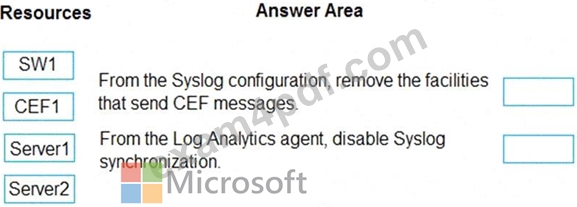
Answer:
Explanation: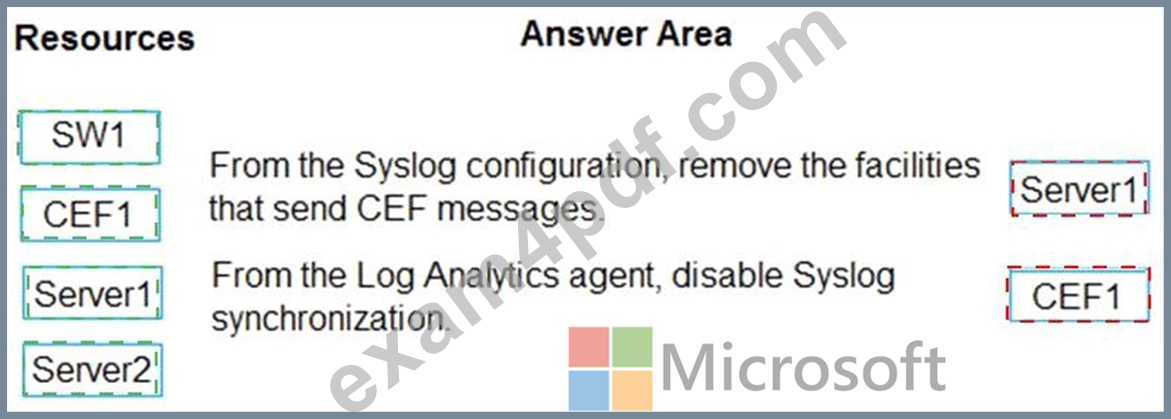
Explanation: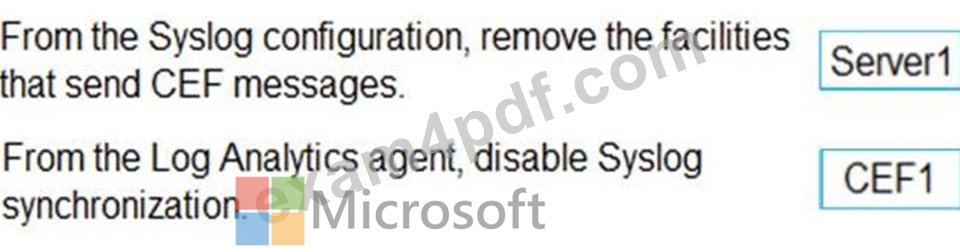
Reference:
https://docs.microsoft.com/en-us/azure/sentinel/connect-log-forwarder?tabs=rsyslog
NEW QUESTION # 47
You have an Azure Functions app that generates thousands of alerts in Azure Security Center each day for normal activity.
You need to hide the alerts automatically in Security Center.
Which three actions should you perform in sequence in Security Center? Each correct answer presents part of the solution.
NOTE: Each correct selection is worth one point.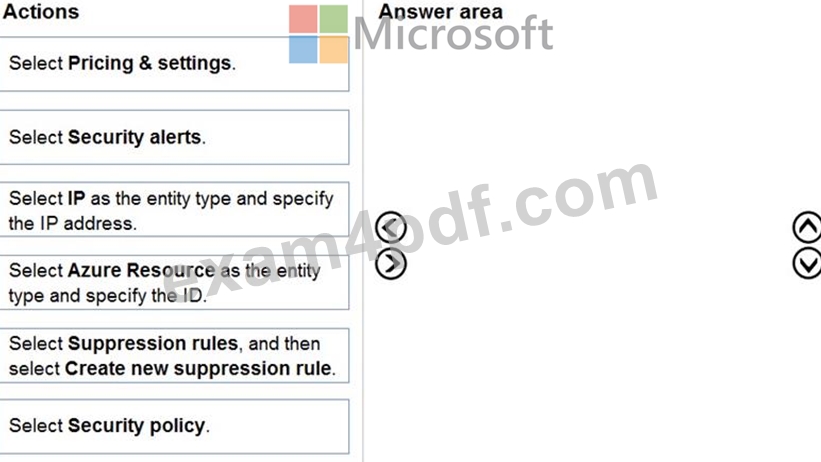
Answer:
Explanation: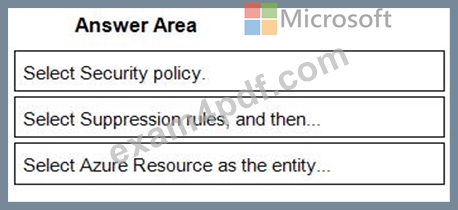
1 - Select Security policy.
2 - Select Suppression rules, and then...
3 - Select Azure Resource as the entity...
Reference:
https://techcommunity.microsoft.com/t5/azure-security-center/suppression-rules-for-azure-security-center-alerts-are-now/ba-p/1404920
NEW QUESTION # 48
You have an Azure subscription that contains an Microsoft Sentinel workspace.
You need to create a hunting query using Kusto Query Language (KQL) that meets the following requirements:
* Identifies an anomalous number of changes to the rules of a network security group (NSG) made by the same security principal
* Automatically associates the security principal with an Microsoft Sentinel entity How should you complete the query? To answer, select the appropriate options in the answer are a. NOTE: Each correct selection is worth one point.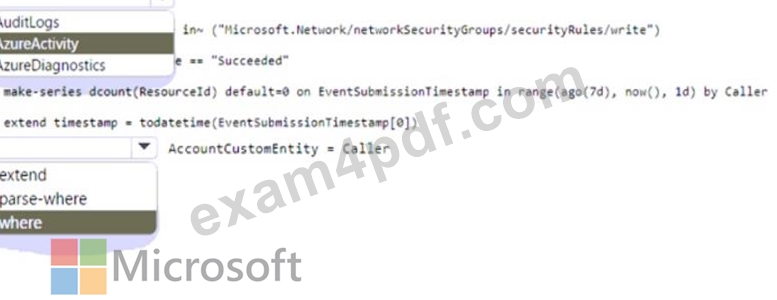
Answer:
Explanation: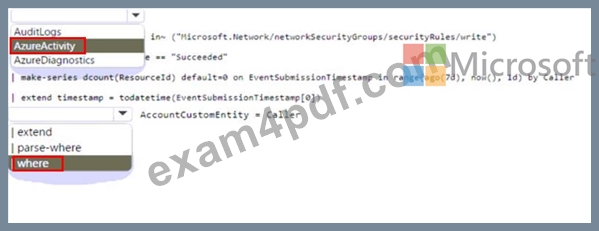
NEW QUESTION # 49
The issue for which team can be resolved by using Microsoft Defender for Endpoint?
- A. sales
- B. executive
- C. marketing
Answer: A
Explanation:
Reference:
https://docs.microsoft.com/en-us/windows/security/threat-protection/microsoft-defender-atp/microsoft-defender-atp-ios
Topic 2, Litware inc.
Case study
This is a case study. Case studies are not timed separately. You can use as much exam time as you would like to complete each case. However, there may be additional case studies and sections on this exam. You must manage your time to ensure that you are able to complete all questions included on this exam in the time provided.
To answer the questions included in a case study, you will need to reference information that is provided in the case study. Case studies might contain exhibits and other resources that provide more information about the scenario that is described in the case study. Each question is independent of the other questions in this case study.
At the end of this case study, a review screen will appear. This screen allows you to review your answers and to make changes before you move to the next section of the exam. After you begin a new section, you cannot return to this section.
To start the case study
To display the first question in this case study, click the Next button. Use the buttons in the left pane to explore the content of the case study before you answer the questions. Clicking these buttons displays information such as business requirements, existing environment, and problem statements. If the case study has an All Information tab, note that the information displayed is identical to the information displayed on the subsequent tabs. When you are ready to answer a question, click the Question button to return to the question.
Overview
Litware Inc. is a renewable company.
Litware has offices in Boston and Seattle. Litware also has remote users located across the United States. To access Litware resources, including cloud resources, the remote users establish a VPN connection to either office.
Existing Environment
Identity Environment
The network contains an Active Directory forest named litware.com that syncs to an Azure Active Directory (Azure AD) tenant named litware.com.
Microsoft 365 Environment
Litware has a Microsoft 365 E5 subscription linked to the litware.com Azure AD tenant. Microsoft Defender for Endpoint is deployed to all computers that run Windows 10. All Microsoft Cloud App Security built-in anomaly detection policies are enabled.
Azure Environment
Litware has an Azure subscription linked to the litware.com Azure AD tenant. The subscription contains resources in the East US Azure region as shown in the following table.
Network Environment
Each Litware office connects directly to the internet and has a site-to-site VPN connection to the virtual networks in the Azure subscription.
On-premises Environment
The on-premises network contains the computers shown in the following table.
Current problems
Cloud App Security frequently generates false positive alerts when users connect to both offices simultaneously.
Planned Changes
Litware plans to implement the following changes:
* Create and configure Azure Sentinel in the Azure subscription.
* Validate Azure Sentinel functionality by using Azure AD test user accounts.
Business Requirements
Litware identifies the following business requirements:
* The principle of least privilege must be used whenever possible.
* Costs must be minimized, as long as all other requirements are met.
* Logs collected by Log Analytics must provide a full audit trail of user activities.
* All domain controllers must be protected by using Microsoft Defender for Identity.
Azure Information Protection Requirements
All files that have security labels and are stored on the Windows 10 computers must be available from the Azure Information Protection - Data discovery dashboard.
Microsoft Defender for Endpoint requirements
All Cloud App Security unsanctioned apps must be blocked on the Windows 10 computers by using Microsoft Defender for Endpoint.
Microsoft Cloud App Security requirements
Cloud App Security must identify whether a user connection is anomalous based on tenant-level data.
Azure Defender Requirements
All servers must send logs to the same Log Analytics workspace.
Azure Sentinel Requirements
Litware must meet the following Azure Sentinel requirements:
* Integrate Azure Sentinel and Cloud App Security.
* Ensure that a user named admin1 can configure Azure Sentinel playbooks.
* Create an Azure Sentinel analytics rule based on a custom query. The rule must automatically initiate the execution of a playbook.
* Add notes to events that represent data access from a specific IP address to provide the ability to reference the IP address when navigating through an investigation graph while hunting.
* Create a test rule that generates alerts when inbound access to Microsoft Office 365 by the Azure AD test user accounts is detected. Alerts generated by the rule must be grouped into individual incidents, with one incident per test user account.
NEW QUESTION # 50
You have a Microsoft Sentinel workspace that has User and Entity Behavior Analytics (UEBA) enabled.
You need to identify all the log entries that relate to security-sensitive user actions performed on a server named Server1. The solution must meet the following requirements:
* Only include security-sensitive actions by users that are NOT members of the IT department.
* Minimize the number of false positives.
How should you complete the query? To answer, select the appropriate options in the answer are a. NOTE: Each correct selection is worth one point.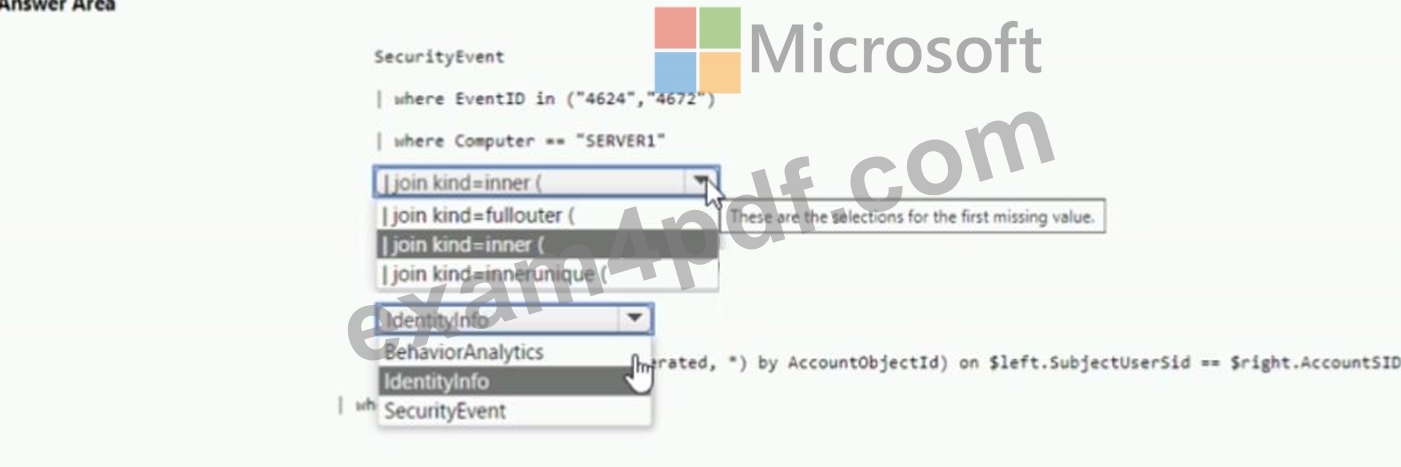
Answer:
Explanation: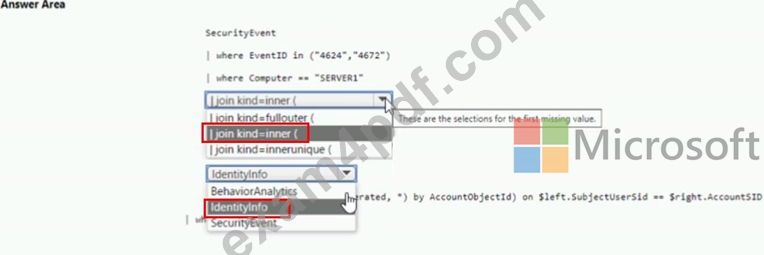
NEW QUESTION # 51
You have the following advanced hunting query in Microsoft 365 Defender.
You need to receive an alert when any process disables System Restore on a device managed by Microsoft Defender during the last 24 hours.
Which two actions should you perform? Each correct answer presents part of the solution.
NOTE: Each correct selection is worth one point.
- A. Add | order by Timestamp to the query.
- B. Block DeviceProcessEvents with DeviceNetworkEvents.
- C. Add DeviceId and ReportId to the output of the query.
- D. Create a detection rule.
- E. Create a suppression rule.
Answer: C,D
Explanation:
In Microsoft 365 Defender advanced hunting, if you want to automatically receive alerts based on a KQL query-such as detecting when a process disables System Restore-you must convert that query into a custom detection rule. According to Microsoft's official documentation, custom detection rules "run hunting queries on a schedule and create alerts and incidents when results are found." In order for the detection rule to function properly and correlate results across devices and incidents, the query must output DeviceId and ReportId. These fields are mandatory for any advanced hunting query that you want to convert into a detection rule because they uniquely identify the device and event instance. Without them, the rule cannot properly generate correlated alerts.
Therefore:
* Create a detection rule (A) - ensures the query runs automatically and alerts are generated.
* Add DeviceId and ReportId (E) - required for detection rule creation and accurate device/event correlation.
Other options are incorrect:
* Suppression rule (B) filters alerts, not generate them.
* Order by Timestamp (C) is optional for display, not alerting.
* DeviceNetworkEvents (D) is unrelated to this process query.
NEW QUESTION # 52
You need to implement Azure Sentinel queries for Contoso and Fabrikam to meet the technical requirements.
What should you include in the solution? To answer, select the appropriate options in the answer area.
NOTE: Each correct selection is worth one point.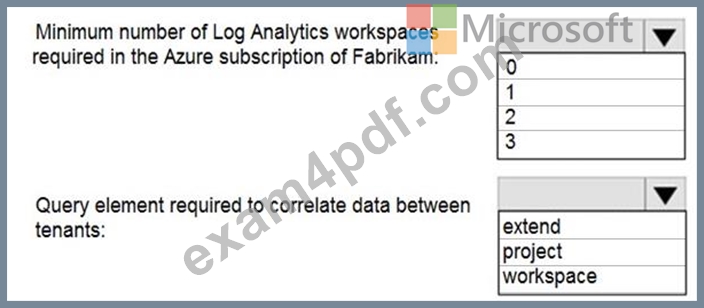
Answer:
Explanation: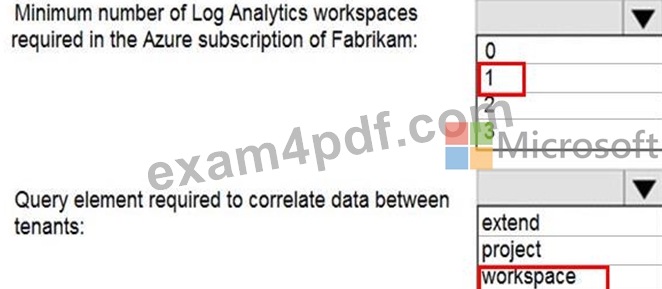
Reference:
https://docs.microsoft.com/en-us/azure/sentinel/extend-sentinel-across-workspaces-tenants
NEW QUESTION # 53
You have a Microsoft 365 E5 subscription that uses Microsoft Defender XDR and contains two users named User1 and User2.
You need to ensure that the users can perform searches by using the Microsoft Purview portal. The solution must meet the following requirements:
* Ensure that User1 can search the Microsoft Purview Audit service logs and review the Microsoft Purview Audit service configuration.
* Ensure that User2 can search Microsoft Exchange Online mailboxes.
* Follow the principle of least privilege.
To which Microsoft Purview role group should you add each user? To answer, select the appropriate options in the answer area.
NOTE: Each correct selection is worth one point.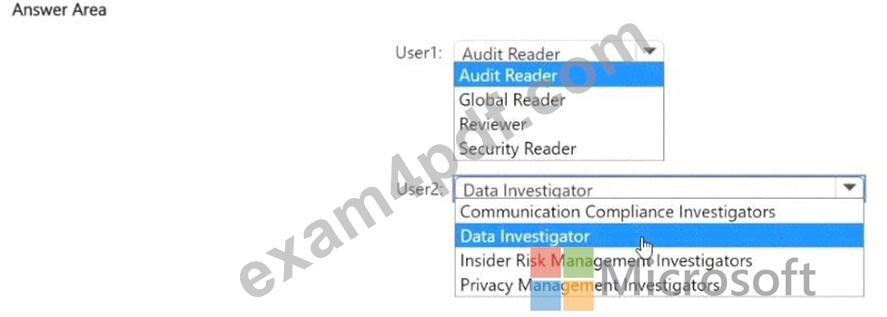
Answer:
Explanation: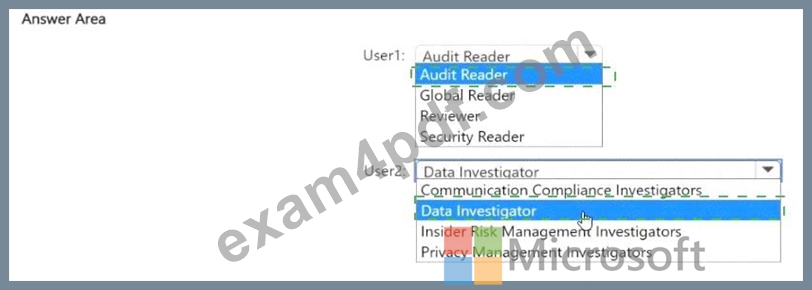
Explanation: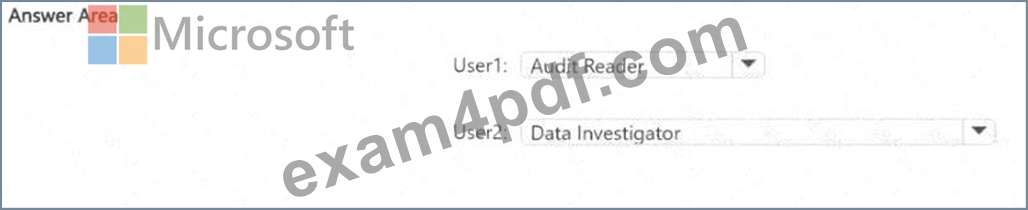
NEW QUESTION # 54
Your on-premises network contains two Active Directory Domain Services (AD DS) domains named contoso.
com and fabrikam.com. Contoso.com contains a group named Group1. Fabrikam.com contains a group named Group2.
You have a Microsoft Sentinel workspace named WS1 that contains a scheduled query rule named Rule1.
Rule1 generates alerts in response to anomalous AD DS security events. Each alert creates an incident.
You need to implement an incident triage solution that meets the following requirements:
Security incidents from contoso.com must be assigned to Group1.
Security incidents from fabrikam.com must be assigned to Group2.
Administrative effort must be minimized.
What should you include in the solution?
- A. two automation rules assigned to Rule1
- B. a playbook that is triggered by the creation of an incident
- C. one automation rule assigned to Rule1
- D. a playbook that is triggered by the creation of an alert
Answer: A
Explanation:
According to Microsoft Sentinel documentation, automation rules are used to automatically assign, tag, or close incidents as soon as they are created. Automation rules can filter incidents based on attributes such as alert name, severity, or source, and then perform specific actions like assigning incidents to users or groups.
In this scenario, incidents are generated by Rule1 from two different AD DS domains - contoso.com and fabrikam.com - and each must be routed to a specific security group for triage. The most efficient approach is to create two automation rules, each filtering incidents by domain (one for contoso.com and one for fabrikam.com) and automatically assigning them to Group1 and Group2 respectively. This approach minimizes administrative overhead because automation rules are easy to maintain and don't require the complexity of a playbook.
A playbook (Logic App) could technically achieve the same outcome, but it introduces more administrative management, permissions, and maintenance. Hence, per Microsoft Sentinel best practices, multiple automation rules provide a lightweight and direct automation layer for incident assignment.
# Correct answer: C. two automation rules assigned to Rule1
NEW QUESTION # 55
You have an Azure subscription that contains a Microsoft Sentinel workspace named WS1.
You need to ensure that the incidents in WS1 include a list of actions that must be performed. The solution must meet the following requirements:
* Ensure that you can build a tailored list of actions for each type of incident.
* Minimize administrative effort.
What should you do? To answer, select the appropriate options in the answer area.
NOTE: Each correct selection is worth one point.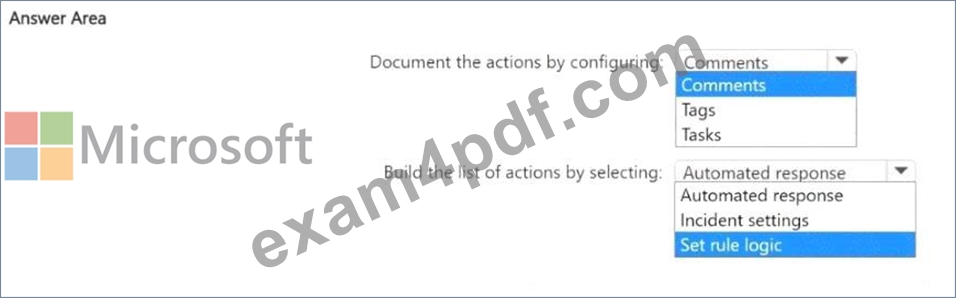
Answer:
Explanation: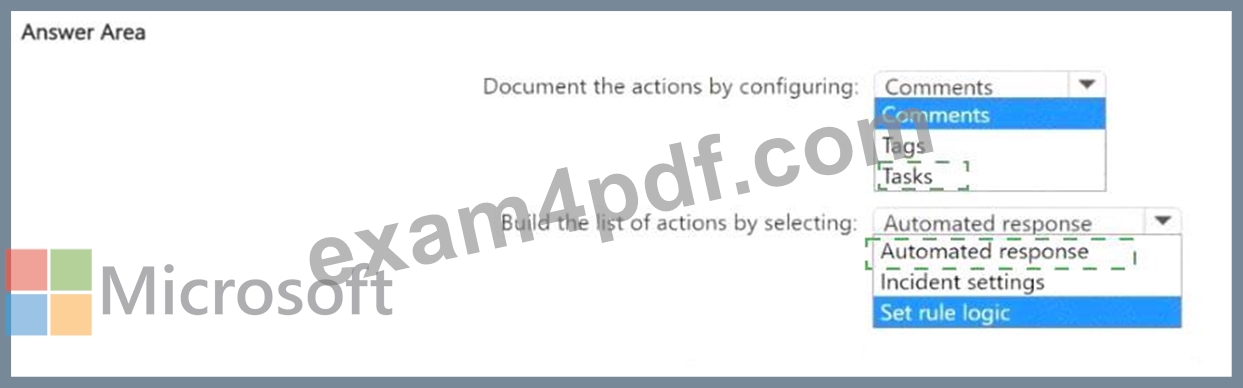
NEW QUESTION # 56
You have a Microsoft 365 E5 subscription that is linked to a Microsoft Entra tenant named contoso.com.
You need to query Microsoft Graph activity logs to identify changes to the roles in contoso.com.
How should you complete the KQL query? To answer, select the appropriate options in the answer area.
NOTE: Each correct selection is worth one point.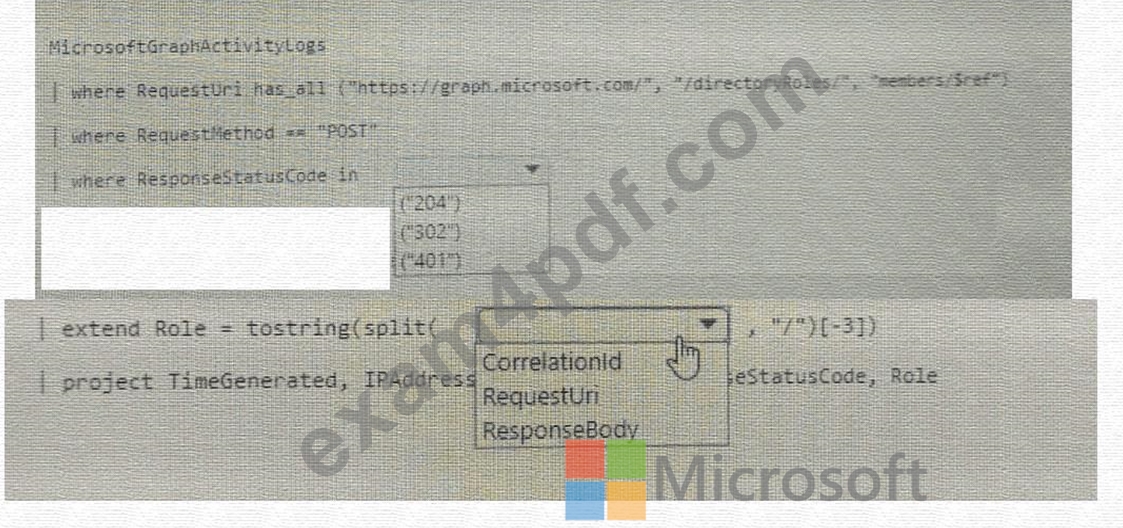
Answer:
Explanation: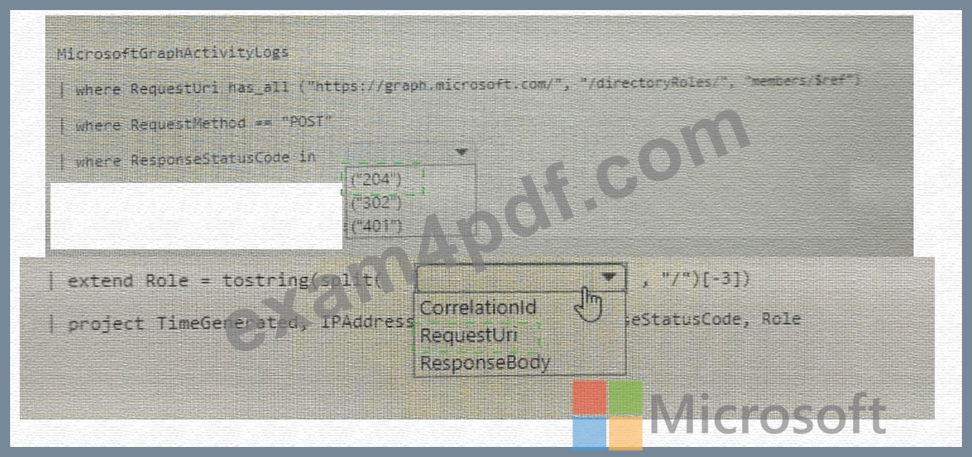
Explanation:
Dropdown/Step
Value to Select
where ResponseStatusCode in (...)
("204")
split([dropdown], "/")[-3]
RequestUri
To detect Microsoft Graph operations that change role membership, you target POST requests to the directoryRoles ... /members/$ref endpoint. Adding a member to a role via Microsoft Graph is performed with POST /directoryRoles/{role-id}/members/$ref and, on success, Graph returns HTTP 204 No Content.
Therefore, filtering ResponseStatusCode to 204 isolates successful role-assignment events while excluding errors like 401/403 and non-mutating redirects such as 302.
The RequestUri contains the role identifier in the path. For URIs like:
https://graph.microsoft.com/v1.0/directoryRoles/{role-id}/members/$ref
splitting on "/" yields: [https:, , graph.microsoft.com, v1.0, directoryRoles, {role-id}, members, $ref]. The element at index -3 is the {role-id}. Hence, extend Role = tostring(split(RequestUri, "/")[-3]) correctly extracts the role GUID for reporting.
Putting it together, a concise query is:
MicrosoftGraphActivityLogs
| where RequestUri has_all ("https://graph.microsoft.com/", "/directoryRoles", "members/$ref")
| where RequestMethod == "POST"
| where ResponseStatusCode in ("204")
| extend Role = tostring(split(RequestUri, "/")[-3])
| project TimeGenerated, IPAddress, ResponseStatusCode, Role
This returns the timestamp, source IP, success code, and the affected role ID for each successful role- membership addition in your tenant.
NEW QUESTION # 57
You have a Microsoft Sentinel workspace.
You need to create playbooks that meet the following requirements:
* Use an automation rule to trigger actions on an entity.
* Call the Entities - Get Hosts action.
Which types of playbooks should you use, and which parameters should you specify? To answer, select the appropriate options in the answer area.
NOTE: Each correct selection is worth one point.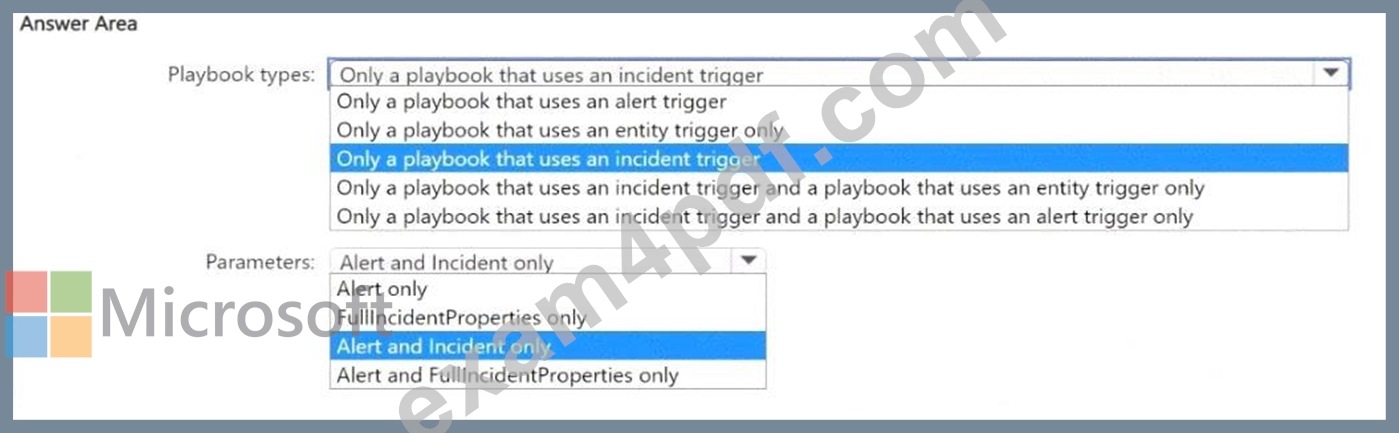
Answer:
Explanation: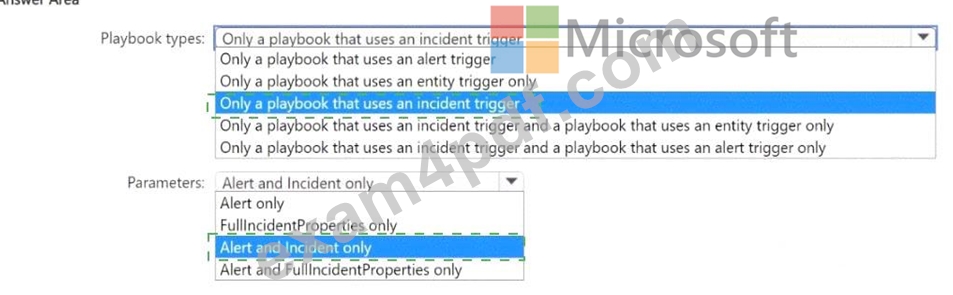
Explanation:
Automation rules in Microsoft Sentinel cannot invoke playbooks that start with the entity trigger; the recommended and supported pattern is to use an incident-triggered playbook because an incident object contains the alerts and the incident's entities. When an automation rule runs a playbook using the When a response to an Microsoft Sentinel incident is triggered (incident trigger), the playbook receives the full incident payload, including the entities array. That incident payload is what allows the logic app to enumerate entities and call the Entities - Get Hosts action for each entity found in the incident.
To ensure the playbook gets the entities and their detailed data needed by the Entities - Get Hosts action, you must configure the automation rule to pass the full incident properties (not just minimal alert fields). In the Run playbook action parameters, choose the option that provides the Alert + Full incident properties (i.e., the full incident object including entities). This guarantees the playbook has the entity objects to feed into the Entities - Get Hosts connector action so it can resolve the hosts related to those entities.
Therefore: use an incident-triggered playbook and pass Alert and FullIncidentProperties so the playbook can call Entities - Get Hosts successfully.
NEW QUESTION # 58
You have an Azure subscription that contains a virtual machine named VM1 and uses Azure Defender. Azure Defender has automatic provisioning enabled.
You need to create a custom alert suppression rule that will supress false positive alerts for suspicious use of PowerShell on VM1.
What should you do first?
- A. From Azure Security Center, export the alerts to a Log Analytics workspace.
- B. On VM1, run the Get-MPThreatCatalog cmdlet.
- C. From Azure Security Center, add a workflow automation.
- D. On VM1 trigger a PowerShell alert.
Answer: D
Explanation:
Reference:
https://docs.microsoft.com/en-us/microsoft-365/security/defender-endpoint/manage-alerts?view=o365-worldwid
NEW QUESTION # 59
You have a Microsoft 365 E5 subscription that is linked to a Microsoft Entra tenant named contoso.com.
You need to query Microsoft Graph activity logs to identify changes to the roles in contoso.com.
How should you complete the KQL query? To answer, select the appropriate options in the answer area.
NOTE: Each correct selection is worth one point.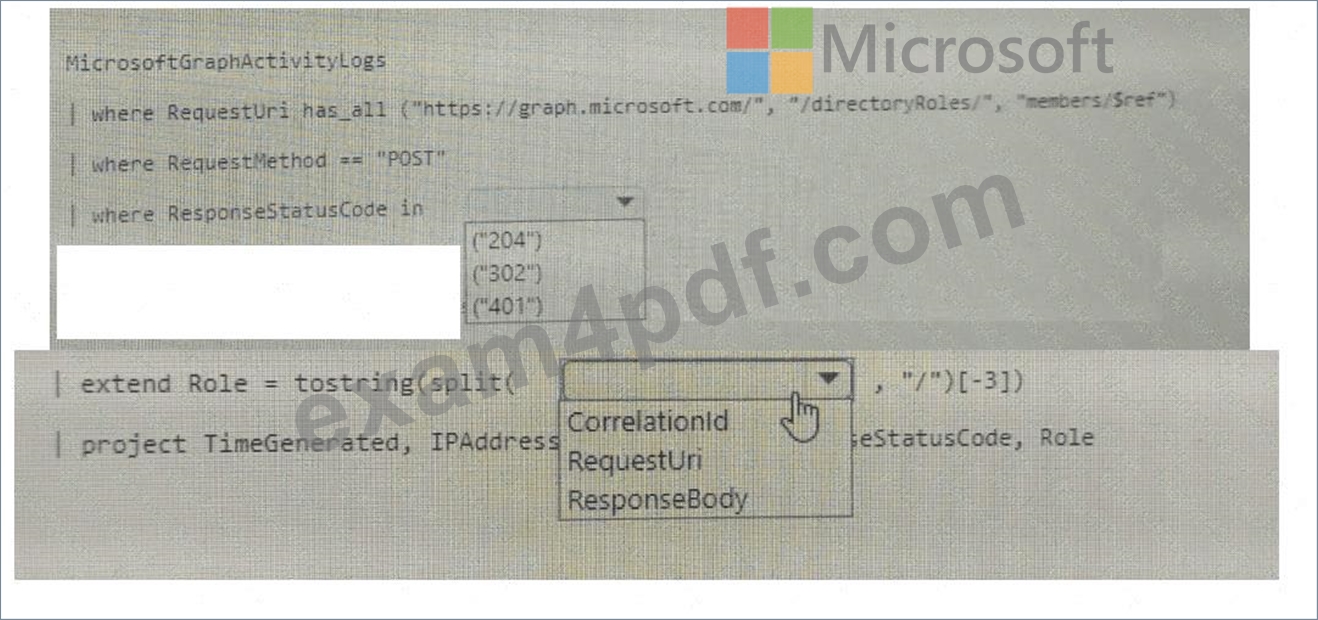
Answer:
Explanation: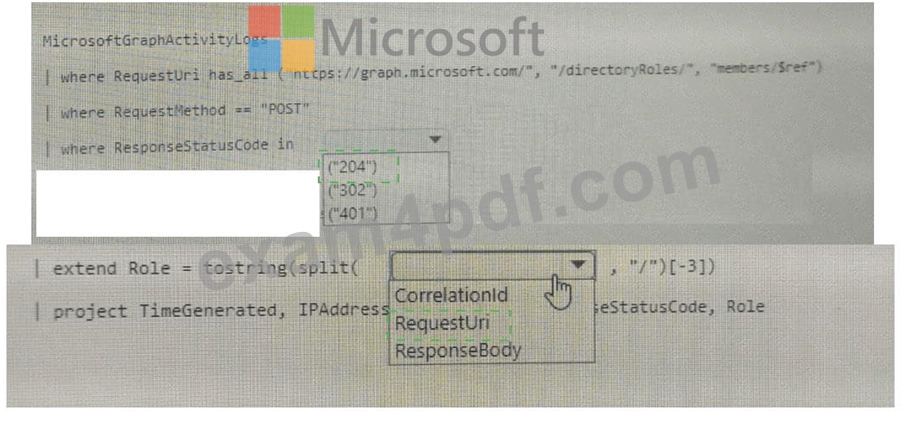
Explanation:
Dropdown/Step
Value to Select
where ResponseStatusCode in (...)
("204")
split([dropdown], "/")[-3]
RequestUri
NEW QUESTION # 60
You need to create a query for a workbook. The query must meet the following requirements:
List all incidents by incident number.
Only include the most recent log for each incident.
How should you complete the query? To answer, select the appropriate options in the answer area.
NOTE: Each correct selection is worth one point.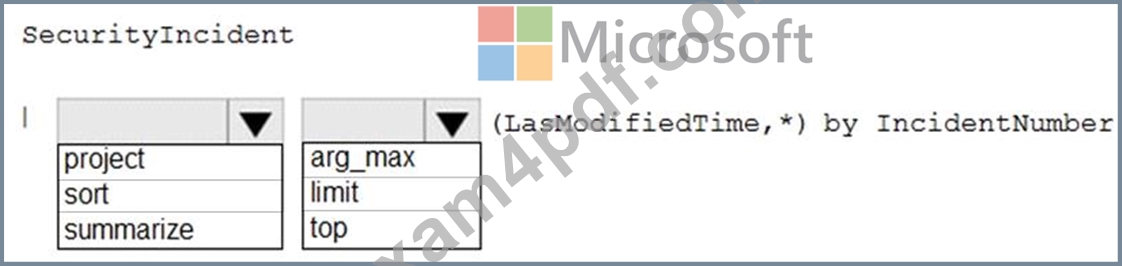
Answer:
Explanation: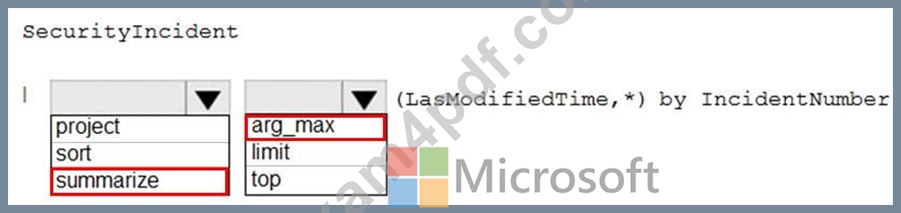
Reference:
https://www.drware.com/whats-new-soc-operational-metrics-now-available-in-sentinel/
NEW QUESTION # 61
You are configuring Azure Sentinel.
You need to send a Microsoft Teams message to a channel whenever a sign-in from a suspicious IP address is detected.
Which two actions should you perform in Azure Sentinel? Each correct answer presents part of the solution.
NOTE: Each correct selection is worth one point.
- A. Enable the Fusion rule.
- B. Associate a playbook to an incident.
- C. Enable Entity behavior analytics.
- D. Create a workbook.
- E. Add a playbook.
Answer: B,E
Explanation:
Reference:
https://docs.microsoft.com/en-us/azure/sentinel/tutorial-respond-threats-playbook
NEW QUESTION # 62
You need to implement Microsoft Defender for Cloud to meet the Microsoft Defender for Cloud requirements and the business requirements. What should you include in the solution? To answer, select the appropriate options in the answer are a. NOTE: Each correct selection is worth one point.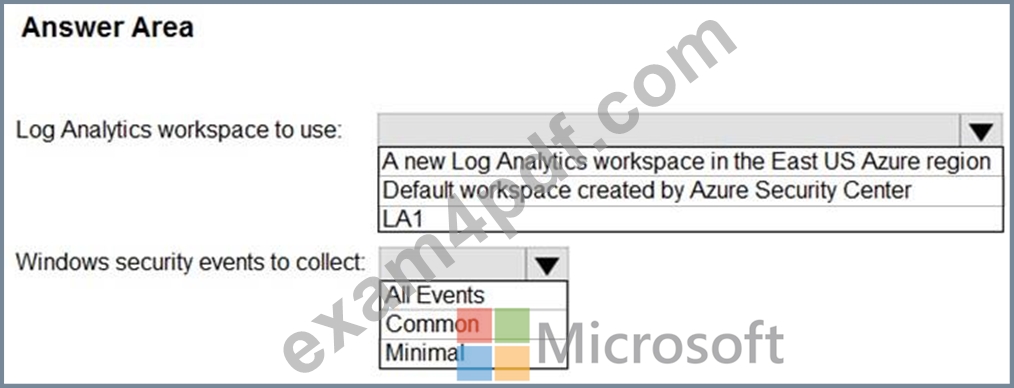
Answer:
Explanation: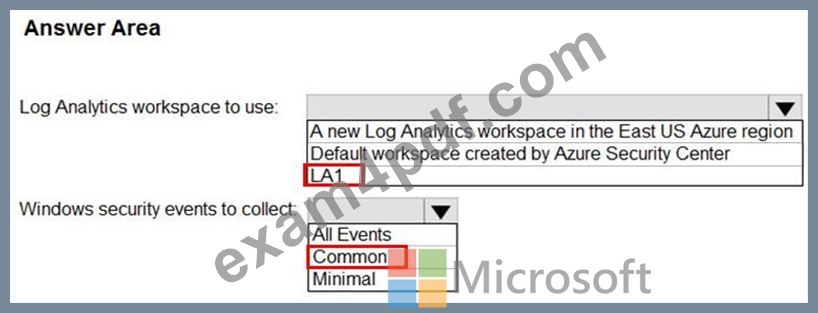
NEW QUESTION # 63
You have four Azure subscriptions. One of the subscriptions contains a Microsoft Sentinel workspace.
You need to deploy Microsoft Sentinel data connectors to collect data from the subscriptions by using Azure Policy. The solution must ensure that the policy will apply to new and existing resources in the subscriptions.
Which type of connectors should you provision, and what should you use to ensure that all the resources are monitored? To answer, select the appropriate options in the answer area.
NOTE: Each correct selection is worth one point.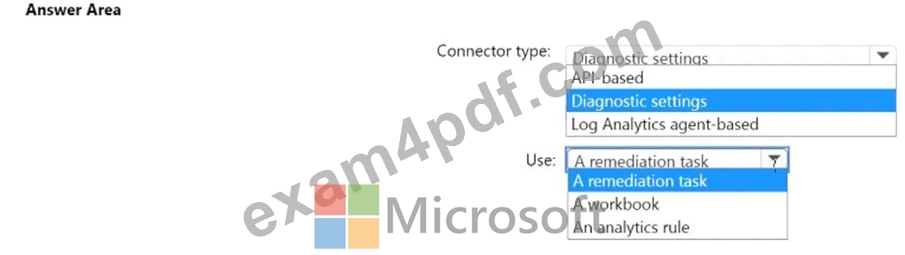
Answer:
Explanation: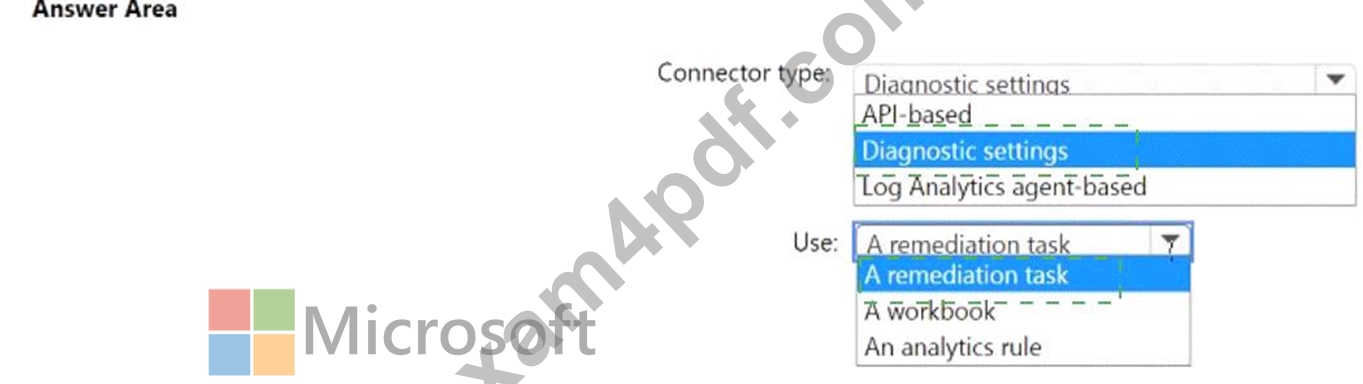
Explanation
NEW QUESTION # 64
......
Achieving the Microsoft Security Operations Analyst certification can be a valuable asset for security professionals looking to advance their careers in the field of cybersecurity. Microsoft Security Operations Analyst certification demonstrates that the candidate has the skills and knowledge necessary to detect, investigate, and respond to security incidents in a Microsoft environment and can be a valuable addition to any security team.
Latest 100% Passing Guarantee - Brilliant SC-200 Exam Questions PDF: https://www.exam4pdf.com/SC-200-dumps-torrent.html
Practice Examples and Dumps & Tips for 2025 Latest SC-200 Valid Tests Dumps: https://drive.google.com/open?id=1uMYvNta0ZTq0NXwXCWkoQpBj91h0gh_7
