

Attested PCNSA Dumps PDF Resource [2023]
Latest PCNSA Actual Free Exam Questions Updated 293 Questions
The PCNSA exam covers a wide range of topics, including firewall configuration and management, network security concepts, NAT/PAT, VPNs, User-ID, App-ID, content filtering, and threat prevention. PCNSA exam consists of 60 multiple-choice and scenario-based questions, and candidates have 90 minutes to complete it. To pass the exam, candidates need to score at least 70%. The PCNSA certification is an industry-recognized credential that demonstrates the candidate's expertise in Palo Alto Networks network security technology and allows them to stand out in a competitive job market.
Palo Alto Networks Certified Network Security Administrator (PCNSA) certification exam is a valuable asset for IT professionals who are interested in network security and want to demonstrate their expertise in managing Palo Alto Networks security solutions. Palo Alto Networks Certified Network Security Administrator certification program is designed to be comprehensive and challenging, ensuring that certified professionals have a deep understanding of network security concepts and technologies. Certified professionals are highly valued in the IT industry and are able to demonstrate their skills to potential employers, making them more competitive in the job market.
The PCNSA certification is an industry-recognized certification that demonstrates the candidate's expertise in using Palo Alto Networks products and services. Palo Alto Networks Certified Network Security Administrator certification is ideal for network security professionals who want to enhance their skills and knowledge in network security and demonstrate their expertise to their employers and peers. Palo Alto Networks Certified Network Security Administrator certification also provides a competitive advantage in the job market and is highly valued by organizations that use Palo Alto Networks products and services.
NEW QUESTION # 153
An administrator is investigating a log entry for a session that is allowed and has the end reason of aged-out. Which two fields could help in determining if this is normal? (Choose two.)
- A. Packets sent/received
- B. Action
- C. Decrypted
- D. IP Protocol
Answer: A,D
Explanation:
When monitoring the traffic logs using Monitor > logs > Traffic, some traffic is seen with the Session End Reason as aged-out. Any traffic that uses UDP or ICMP is seen will have session end reason as aged-out in the traffic log. This is because unlike TCP, there is there is no way for a graceful termination of UDP session and so aged-out is a legitimate session-end reason for UDP (and ICMP) sessions.
Link: https://knowledgebase.paloaltonetworks.com/KCSArticleDetail?id=kA10g000000PMjLCAW
NEW QUESTION # 154
Users from the internal zone need to be allowed to Telnet into a server in the DMZ zone.
Complete the security policy to ensure only Telnet is allowed.
Security Policy: Source Zone: Internal to DMZ Zone __________services "Application defaults", and action = Allow
- A. Application = `Telnet'
- B. Log Forwarding
- C. USER-ID = `Allow users in Trusted'
- D. Destination IP: 192.168.1.123/24
Answer: A
NEW QUESTION # 155
Given the cyber-attack lifecycle diagram identify the stage in which the attacker can run malicious code against a vulnerability in a targeted machine.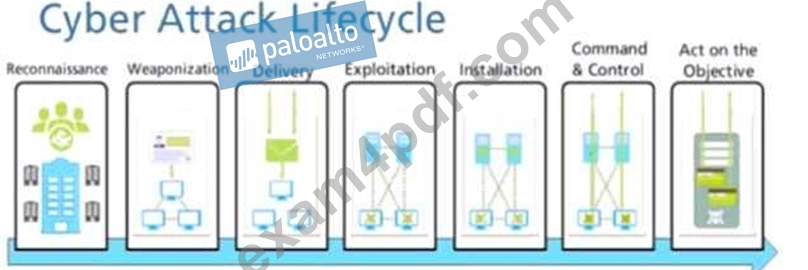
- A. Act on the Objective
- B. Exploitation
- C. Installation
- D. Reconnaissance
Answer: B
NEW QUESTION # 156
Given the detailed log information above, what was the result of the firewall traffic inspection?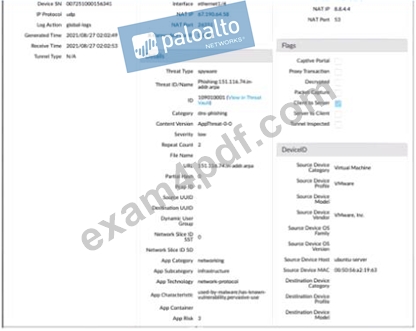
- A. It was blocked by the Anti-Spyware Profile action.
- B. It was blocked by the Vulnerability Protection profile action.
- C. It was blocked by the Anti-Virus Security profile action.
- D. It was blocked by the Security policy action.
Answer: A
NEW QUESTION # 157
Which two matching criteria are used when creating a Security policy involving NAT? (Choose two.)
- A. Pre-NAT zone
- B. Post-NAT zone
- C. Pre-NAT address
- D. Post-NAT address
Answer: B,C
NEW QUESTION # 158
Refer to the exhibit. A web server in the DMZ is being mapped to a public address through DNAT.
Which Security policy rule will allow traffic to flow to the web server?
- A. Untrust (any) to DMZ (1.1.1.100), web browsing - Allow
- B. Untrust (any) to DMZ (10.1.1.100), web browsing - Allow
- C. Untrust (any) to Untrust (1.1.1.100), web browsing - Allow
- D. Untrust (any) to Untrust (10.1.1.100), web browsing - Allow
Answer: A
Explanation:
https://docs.paloaltonetworks.com/pan-os/8-1/pan-os-admin/networking/nat/nat-configuration-examples/destination-nat-exampleone-to-one-mapping
NEW QUESTION # 159
Employees are shown an application block page when they try to access YouTube. Which security policy is blocking the YouTube application?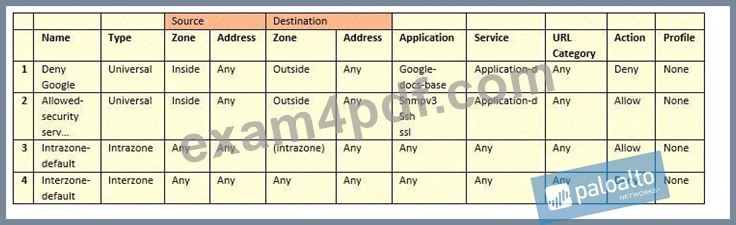
- A. allowed-security services
- B. Deny Google
- C. intrazone-default
- D. interzone-default
Answer: D
NEW QUESTION # 160
The CFO found a USB drive in the parking lot and decide to plug it into their corporate laptop. The USB drive had malware on it that loaded onto their computer and then contacted a known command and control (CnC) server, which ordered the infected machine to begin Exfiltrating data from the laptop.
Which security profile feature could have been used to prevent the communication with the CnC server?
- A. Create an anti-spyware profile and enable DNS Sinkhole
- B. Create a URL filtering profile and block the DNS Sinkhole category
- C. Create an antivirus profile and enable DNS Sinkhole
- D. Create a security policy and enable DNS Sinkhole
Answer: A
NEW QUESTION # 161
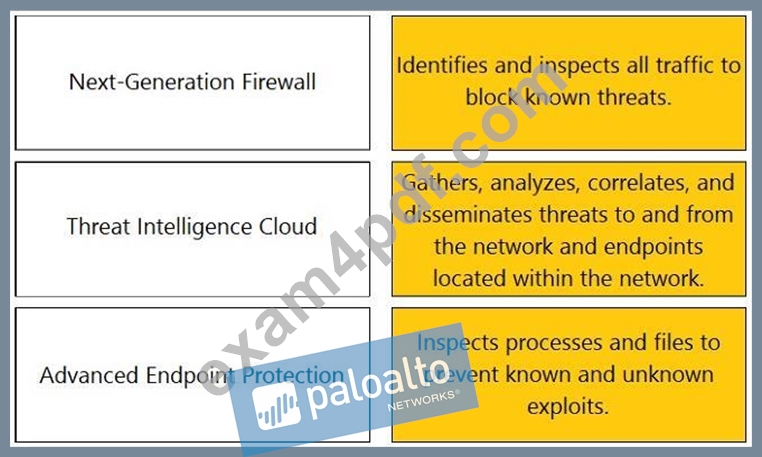
Match the Palo Alto Networks Security Operating Platform architecture to its description.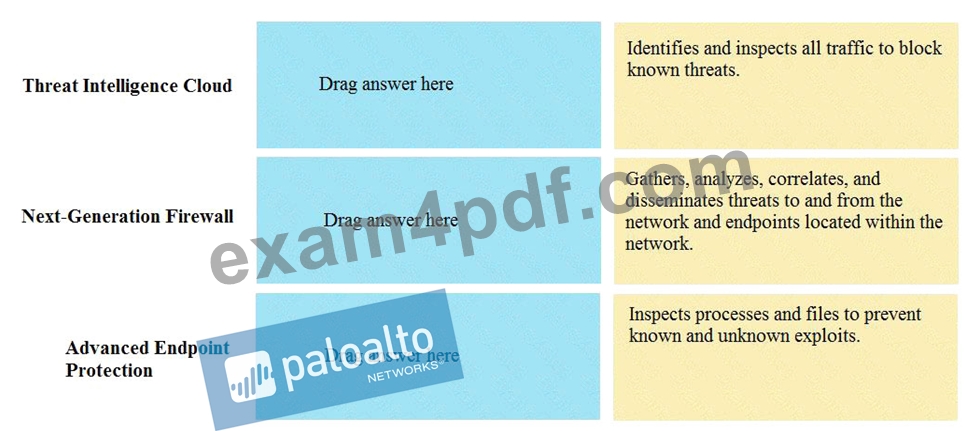
Answer:
Explanation: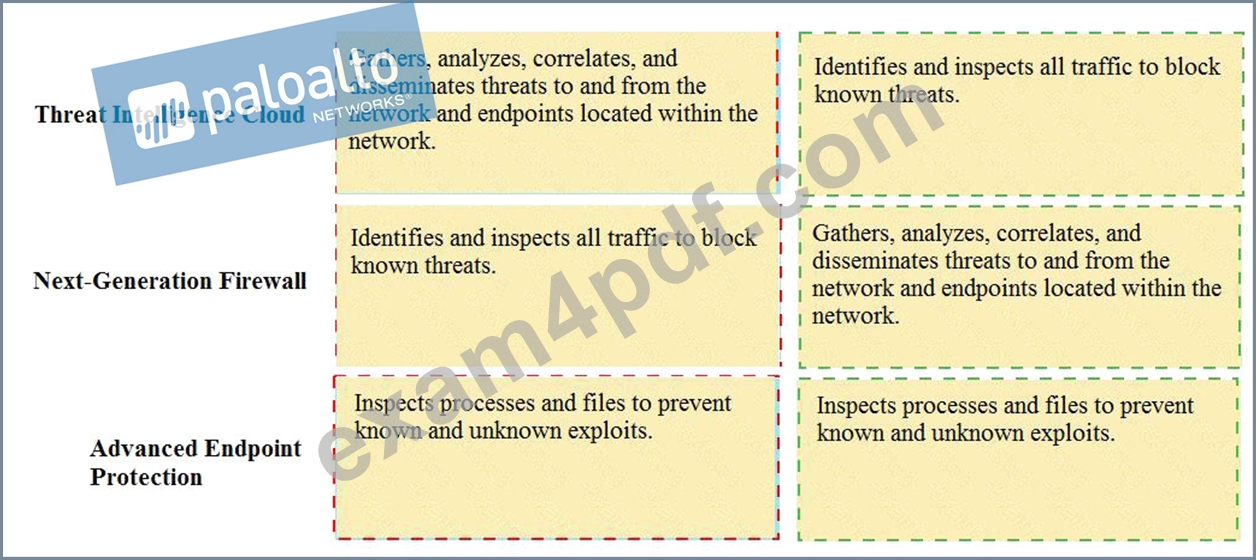
Explanation
Threat Intelligence Cloud - Gathers, analyzes, correlates, and disseminates threats to and from the network and endpoints located within the network.
Next-Generation Firewall - Identifies and inspects all traffic to block known threats Advanced Endpoint Protection - Inspects processes and files to prevent known and unknown exploits
NEW QUESTION # 162
Based on the show security policy rule would match all FTP traffic from the inside zone to the outside zone?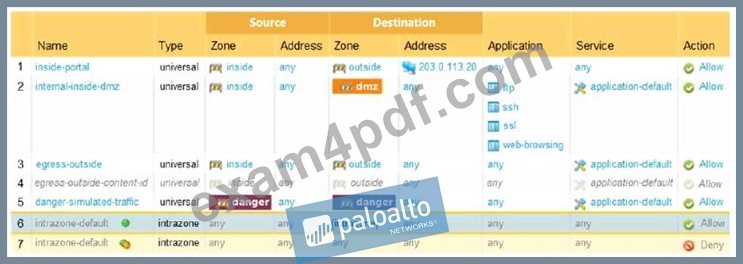
- A. inside-portal
- B. intercone-default
- C. internal-inside-dmz
- D. engress outside
Answer: D
NEW QUESTION # 163
The Palo Alto Networks NGFW was configured with a single virtual router named VR-1.
What changes are required on VR-1 to route traffic between two interfaces on the NGFW?
- A. Enable the redistribution profile to redistribute connected routes
- B. Add interfaces to the virtual router
- C. Add zones attached to interfaces to the virtual router
- D. Add static routes to route between the two interfaces
Answer: B
Explanation:
https://docs.paloaltonetworks.com/pan-os/8-1/pan-os-admin/networking/virtual-routers.html
NEW QUESTION # 164
An administrator has configured a Security policy where the matching condition includes a single application and the action is deny If the application s default deny action is reset-both what action does the firewall take*?
- A. It sends a TCP reset to the client-side and server-side devices
- B. It silently drops the traffic and sends an ICMP unreachable code
- C. It silently drops the traffic
- D. It sends a TCP reset to the server-side device
Answer: A
NEW QUESTION # 165
In the example security policy shown, which two websites would be blocked? (Choose two.)
- A. LinkedIn
- B. Amazon
- C. YouTube
- D. Facebook
Answer: A,D
NEW QUESTION # 166
View the diagram. What is the most restrictive, yet fully functional rule, to allow general Internet and SSH traffic into both the DMZ and Untrust/lnternet zones from each of the lOT/Guest and Trust Zones?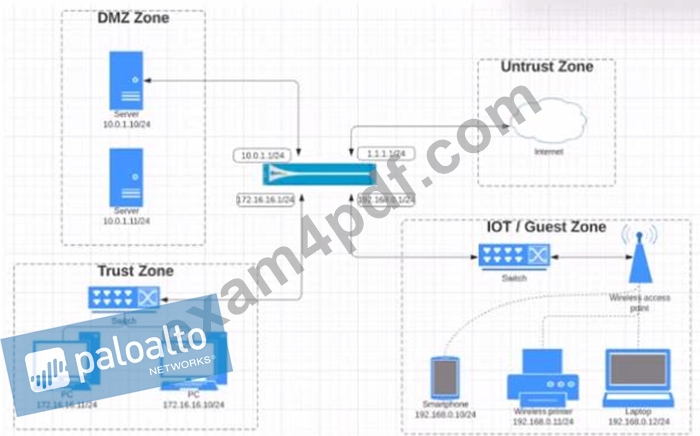
- A.

- B.

- C.

- D.

Answer: B
NEW QUESTION # 167
Which Palo Alto Networks service protects cloud-based applications such as Dropbox and Salesforce by monitoring permissions and shares and scanning files for sensitive information?
- A. Panorama
- B. AutoFocus
- C. Prisma SaaS
- D. GlobalProtect
Answer: C
Explanation:
Explanation/Reference:
NEW QUESTION # 168
If users from the Trusted zone need to allow traffic to an SFTP server in the DMZ zone, how should a Security policy with App-ID be configured?
A)
B)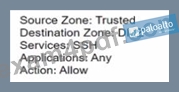
C)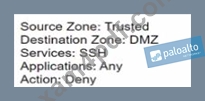
D)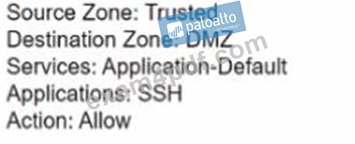
- A. Option D
- B. Option A
- C. Option B
- D. Option C
Answer: A
NEW QUESTION # 169
Which statement is true regarding a Heatmap report?
- A. When guided by authorized sales engineer, it helps determine the areas of greatest security risk
- B. It runs only on firewalls.
- C. It provides a percentage of adoption for each assessment area.
- D. It provides a set of questionnaires that help uncover security risk prevention gaps across all areas of network and security architecture.
Answer: C
Explanation:
https://live.paloaltonetworks.com/t5/best-practice-assessment-blogs/the-best-practice-assessment-bpa-tool-for-ngfw-and-panorama/ba-p/248343
NEW QUESTION # 170
Which license must an Administrator acquire prior to downloading Antivirus Updates for use with the firewall?
- A. Threat Prevention License
- B. Threat Implementation License
- C. Threat Protection License
- D. Threat Environment License
Answer: A
Explanation:
https://docs.paloaltonetworks.com/pan-os/8-0/pan-os-admin/threat-prevention/set-up-antivirus-anti-spyware-and-vulnerability-protection.html
NEW QUESTION # 171
Given the screenshot what two types of route is the administrator configuring? (Choose two )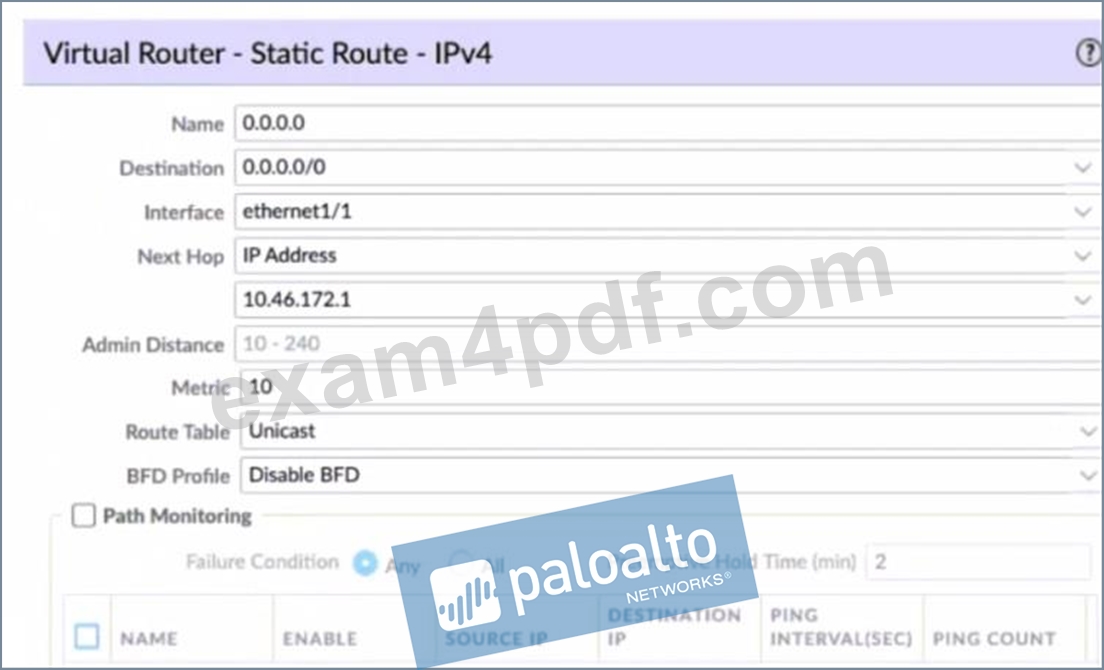
- A. default route
- B. OSPF
- C. static route
- D. BGP
Answer: A
NEW QUESTION # 172
Based on the screenshot what is the purpose of the group in User labelled ''it"?
- A. Allows users to access IT applications on all ports
- B. Allows "any" users to access servers in the DMZ zone
- C. Allows users in group "DMZ" lo access IT applications
- D. Allows users in group "it" to access IT applications
Answer: D
NEW QUESTION # 173
Match each feature to the DoS Protection Policy or the DoS Protection Profile.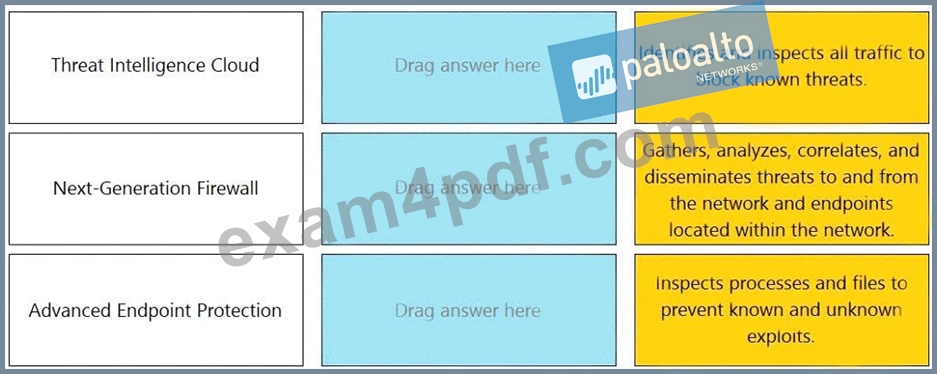
Answer:
Explanation: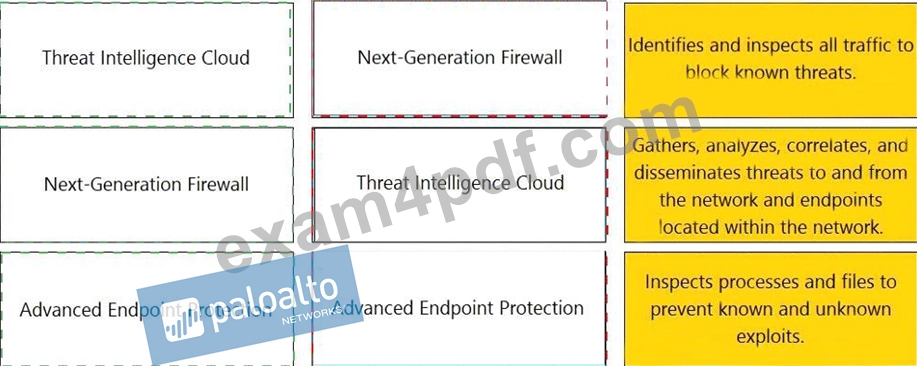
NEW QUESTION # 174
......
PCNSA Certification Overview Latest PCNSA PDF Dumps: https://www.exam4pdf.com/PCNSA-dumps-torrent.html
Free PCNSA Exam Braindumps certification guide Q&A: https://drive.google.com/open?id=1bVkN77pRNAo7-xXHuMbeRf3QU2_V1U2O
